
Have you ever walked through your front door only to find your favorite pair of leather shoes transformed into a pile of confetti? Or perhaps your once-quiet evening is now punctuated by a dog who won't stop barking at the wall? Before you label your furry friend as 'naughty' or 'stubborn,' it is important to realize that dogs, much like humans, have a finite amount of patience for boredom. Often, what we perceive as behavior problems are actually symptoms of a mind that is starving for engagement.
Dogs were originally bred for jobs—herding, hunting, or guarding. In our modern world, their biggest job is often just waiting for us to come home. While physical exercise is vital, it only tires out the body. A dog with a marathon-runner's physique and a stagnant mind is a recipe for household chaos. In this guide, we will explore the five unmistakable signs that your dog is craving a mental workout and how you can help them find their 'inner genius.'
1. Destructive Chewing and 'Interior Decorating'
If your dog has suddenly taken an interest in the structural integrity of your baseboards or the stuffing inside your sofa cushions, you aren't just dealing with a teething phase. Destructive chewing is one of the most common ways dogs self-medicate when they are bored. Chewing releases endorphins in a dog's brain, providing a natural 'high' that distracts them from the monotony of a quiet house.
🐶 Unlock Your Dog's Hidden Intelligence!
Transform your dog's behavior with **Brain Training for Dogs** – a proven, science-based training system that enhances your dog's intelligence and obedience.
🐾 Get Started Today →When we look at how to stop puppy biting or destructive chewing, we often focus on the physical act, but the root cause is frequently a lack of mental outlet. If they aren't given a puzzle to solve, they will find their own 'puzzle'—which unfortunately might be your television remote. This behavior is a clear signal that their cognitive needs are not being met.
2. Excessive Barking and 'Alerting' to Nothing
Does your dog bark at every leaf that blows past the window? Do they seem to be holding a loud, one-sided conversation with the mailman three blocks away? While some vocalization is natural, a dog that barks incessantly is often just looking for something to do. They have discovered that barking is a high-energy activity that usually gets a reaction out of you, even if that reaction is a frustrated shout.
Understanding why does my dog bark so much requires looking beyond the noise. For many dogs, barking is a form of self-entertainment. By creating a 'job' out of guarding the window, they feel a sense of purpose that their daily routine lacks. If your dog is barking at night specifically, it may be because they haven't burned enough mental energy during the day to settle into a deep sleep, leading to a cycle of how to stop your dog from barking at night that focuses on late-night enrichment.
3. Pacing and an Inability to Settle
We all know the 'zoomies'—that frantic burst of energy where a dog laps the living room at top speed. While zoomies are a normal release of pent-up energy, constant pacing or an inability to relax is a different story. If your dog follows you from room to room, circles their bed ten times without lying down, or seems perpetually 'on edge,' they are likely suffering from mental restlessness.
Physical exercise can actually exacerbate this in high-energy breeds. If you only take your dog for long runs without giving them mental tasks, you are simply building a more athletic, bored dog. They become physically fit but remain mentally wired. Integrating cognitive challenges can help lower their baseline stress levels and teach them that 'off-switch' we all crave.
4. Pawing, Nudging, and 'The Stare'
You’re sitting on the couch trying to watch a movie, and suddenly, a wet nose is shoved under your arm. Or perhaps you feel a persistent paw tapping your knee. This attention-seeking behavior is a polite (or not-so-polite) request for engagement. When a dog realizes that why your dog’s ‘bad behavior’ is actually a boredom crisis is the only way to get your eyes off your phone, they will repeat that behavior until it becomes a habit.
Instead of viewing this as a nuisance, try to see it as a communication tool. Your dog is telling you that their brain is hungry. Rather than just a walk around the block, they might need a game of 'hide and seek' with their favorite toy or a quick 10-minute training session to master a new skill.
5. Obsessive or Repetitive Behaviors
In more extreme cases of boredom, dogs may develop 'stereotypies'—repetitive behaviors that serve no clear purpose. This includes tail-chasing, shadow-pinning, or licking their paws until the skin becomes raw. These behaviors are often a sign of chronic stress caused by a lack of environmental enrichment. According to the American Kennel Club, mental stimulation is a critical pillar of canine wellness that prevents these types of compulsive habits from forming.
The Solution: Why Brain Training Matters
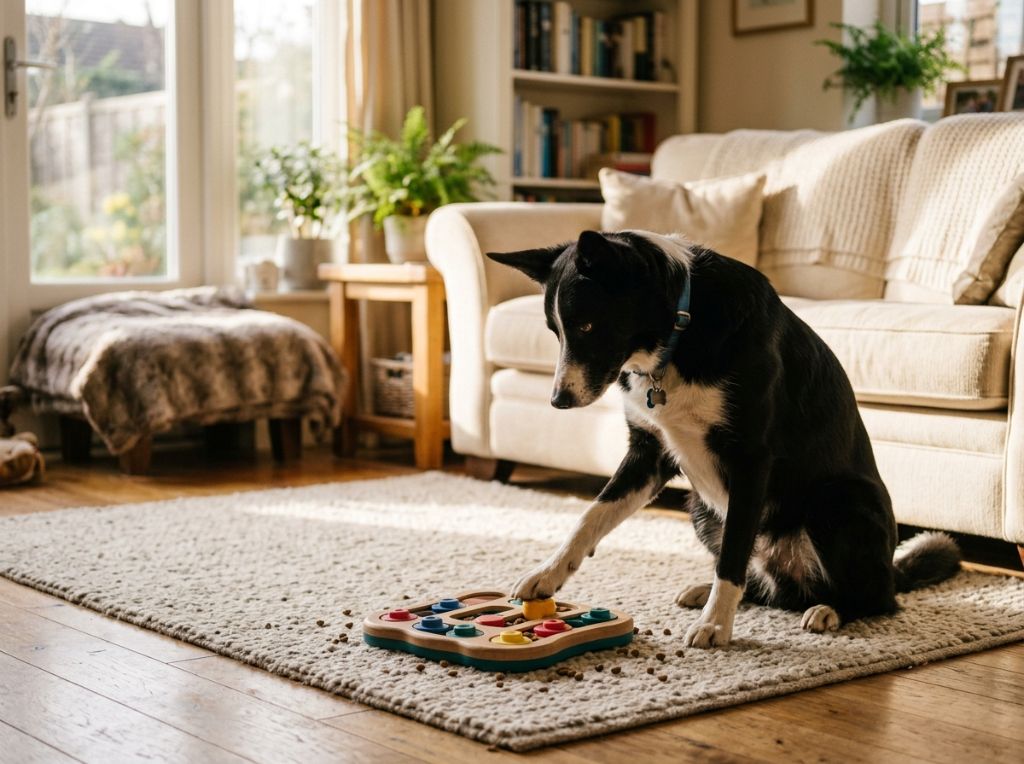
So, how do we fix a boredom crisis? The answer isn't necessarily more time at the dog park; it is more time using the 'gray matter.' Brain training engages a dog’s natural problem-solving abilities and taps into their instinctual drives. When a dog has to figure out how to get a treat out of a bottle or navigate an indoor obstacle course, they tire out much faster than they would during a simple walk.
If you are looking for a structured way to start, many owners have found success with specialized programs. You can read a detailed Brain Training for Dogs review to see if a curriculum-based approach is right for your lifestyle. These programs focus on positive reinforcement and 'leveling up' your dog's intelligence, which builds a stronger bond between you both.
Simple Ways to Increase Mental Stimulation
- Ditch the Bowl: Instead of feeding your dog from a standard bowl, use a slow feeder or a snuffle mat. This forces them to 'hunt' for their food using their nose.
- The 'Muffin Tin' Game: Place treats in the holes of a muffin tin and cover them with tennis balls. Your dog has to remove the balls to reach the reward.
- New Environments: Even a different walking route provides a wealth of new smells (the 'canine news') that provides significant mental processing.
- Trick Training: Teaching a new trick for 15 minutes is equivalent to a 45-minute walk in terms of exhaustion.
Frequently Asked Questions
How much mental stimulation does a dog need daily?
Most dogs benefit from at least 20-30 minutes of focused mental exercise a day. This can be broken into short 5-minute sessions to keep it fun and engaging.
Can older dogs benefit from brain training?
Absolutely! Cognitive health is vital for senior dogs to help stave off canine cognitive dysfunction. Just keep the physical requirements low and the mental rewards high.
What are the best toys for mental stimulation?
Look for treat-dispensing puzzles, snuffle mats, and interactive toys that require the dog to slide, flip, or pull pieces to find hidden rewards.
Conclusion
Your dog isn't trying to be difficult when they chew the rug or bark at the wind; they are simply trying to navigate a world that sometimes feels a little too quiet for their active minds. By recognizing these five signs, you can shift your perspective from frustration to empowerment. Providing your dog with the mental workouts they crave won't just save your furniture—it will lead to a happier, calmer, and more connected companion.
🐕 Transform Your Dog’s Life Today!
Imagine a world where your dog listens, learns quickly, and behaves perfectly! With **Brain Training for Dogs**, you’ll experience a joyful, well-trained pet in no time!
🌟 Begin the Transformation →If you're ready to unlock your dog's true potential and eliminate those 'boredom' behaviors for good, starting a structured brain training routine is the best gift you can give them.
🐾 Say Goodbye to Bad Behavior!
Tired of your dog's stubborn habits? Discover a **fun and easy** brain training system that turns any dog into a well-behaved genius in just a few weeks!
🐶 Start Training Now →