

There is a reason why Golden Retrievers are one of the most popular breeds in the world. With their wagging tails, soulful eyes, and a heart big enough to love the entire neighborhood, they are the quintessential family dog. However, many new owners quickly realize that the 'Golden' dream involves a lot of work. Without proper structure, that adorable bundle of fluff can turn into a 70-pound whirlwind of energy that jumps on guests and treats your furniture like a chew toy.
Training a Golden Retriever is not just about teaching commands; it is about building a relationship based on trust and communication. Because they are so eager to please, they respond beautifully to positive methods, but their high intelligence means they can also get bored easily. If you have been struggling with a pup that seems to have selective hearing, don't worry. This guide will walk you through everything you need to know to transform your boisterous buddy into a focused companion.
Understanding the Golden Retriever Mindset
To train a Golden effectively, you first have to understand what makes them tick. They were originally bred as gundogs to retrieve waterfowl, which means they have two primary instincts: they love to carry things in their mouths, and they are incredibly social. They thrive on human interaction and do not do well when left alone for long periods.
🐶 Unlock Your Dog's Hidden Intelligence!
Transform your dog's behavior with **Brain Training for Dogs** – a proven, science-based training system that enhances your dog's intelligence and obedience.
🐾 Get Started Today →Unlike more stubborn breeds, a Golden Retriever’s primary motivation is making you happy (and, of course, the occasional treats). However, their 'puppyhood' tends to last longer than other breeds. It is common for a Golden to act like a clumsy, hyperactive teenager until they are two or three years old. Acknowledging this long developmental phase will help you stay patient when they occasionally forget their manners.
Starting with the Basics: The Foundational Commands
The secret to a well-behaved dog is a rock-solid foundation. You want your dog to look to you for direction in every situation. While it is tempting to jump straight to fancy tricks, you must ensure they have mastered the essentials first. For instance, knowing how to teach your dog to sit, stay, and come provides the safety net you need when you're out in public or opening the front door.
Consistency is the most important element during this phase. If 'down' means lie down on Monday, but you use 'off' on Tuesday, your dog will become confused. Use short, 5-to-10-minute training sessions several times a day rather than one long, exhausting hour. Goldens have a lot of energy, but their attention spans—especially as puppies—can be surprisingly short.
Managing the 'Land Shark' Phase: Mouthiness and Biting
Because they were bred to retrieve, Golden Retrievers are famously 'mouthy.' Everything goes in the mouth—your shoes, the remote, and unfortunately, your hands. While puppy nipping is a natural behavior, it can become a painful problem if not addressed early. It is essential to learn how to stop puppy biting by redirecting that energy toward appropriate toys and teaching bite inhibition.
Never use physical punishment for mouthing. Instead, the 'yelp and ignore' method or immediately offering a chew toy works wonders. According to the American Kennel Club, redirecting a dog's natural instincts into a positive outlet is the most effective way to manage breed-specific behaviors. If they want to carry something, give them a dedicated 'carrying toy' to hold during walks or when guests arrive.
Mastering the Walk: Preventing Leash Pulling
Walking a Golden Retriever should be a joy, but for many owners, it feels like a weightlifting session. These dogs are strong and naturally move faster than humans. If they see a squirrel or a friendly neighbor, their first instinct is to lunge forward to investigate. Learning how to stop your dog from pulling on the leash is a high priority for any Golden owner who values their shoulder joints.
Use a front-clip harness or a head halter if your dog is a heavy puller, but remember that these are just tools—not a replacement for training. Reward your dog every time the leash goes slack. Eventually, they will realize that staying by your side is the most rewarding place to be. If they start to pull, simply stop walking. Become a 'tree' and wait for them to return to your side before moving again.
The Power of Mental Stimulation
A tired Golden is a good Golden, but physical exercise is only half the battle. If you only focus on running them for miles, you will simply end up with a very fit dog that is still bored and destructive. This breed needs to use its brain. Many owners often wonder does brain training for dogs actually work when they are dealing with a dog that seems to ignore commands despite plenty of exercise.
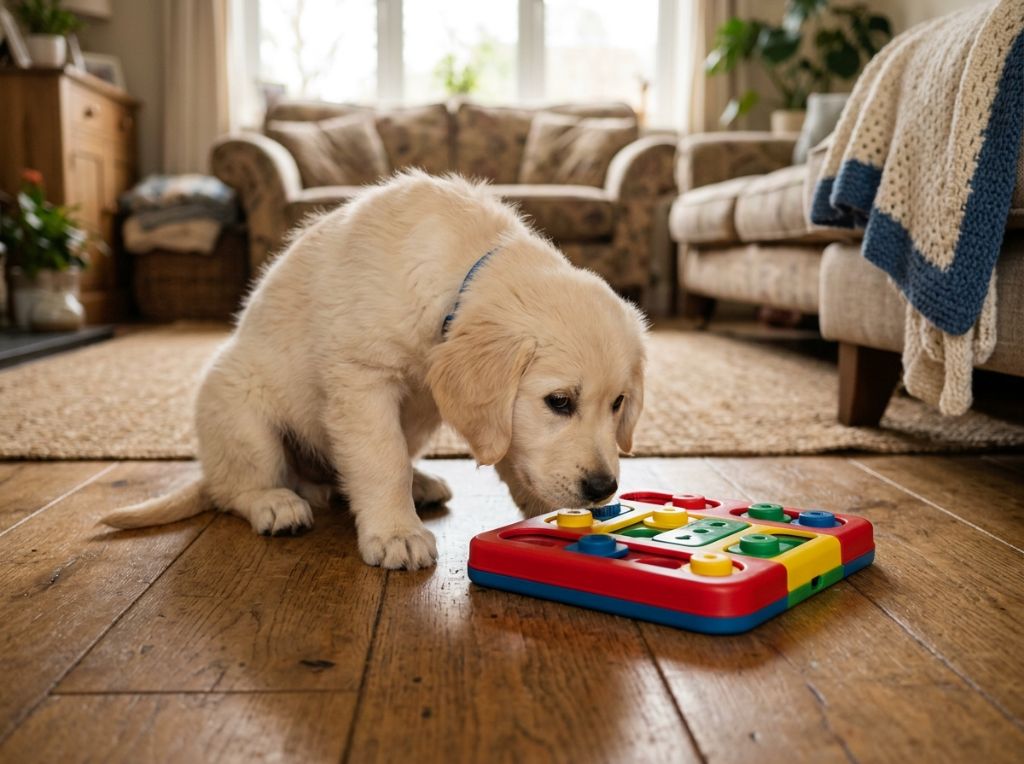
The answer is a resounding yes. Engaging their mind helps settle their nervous system and burns more energy than a long walk ever could. When you challenge their intellect, you eliminate the root cause of many behavioral issues: boredom.
Advanced Focus with Brain Training
If you find that your Golden Retriever is easily distracted or struggles to focus when there are other dogs around, you might need to look deeper into their cognitive development. Traditional obedience training covers the 'what' (sit, stay), but brain training covers the 'how' (how to think and problem-solve).
By using games that require your dog to figure things out, you build their confidence and their ability to stay calm under pressure. This is particularly helpful for Goldens who suffer from over-excitement. Instead of reacting to everything in their environment, they learn to look to you for the next 'puzzle.' This shift in mindset makes every other part of training—from leash walking to recall—significantly easier.
Socialization: Creating a Friendly Adult
While Goldens are naturally friendly, they still require extensive socialization. They need to be exposed to different sights, sounds, and people in a positive way. A lack of socialization can lead to a dog that is fearful or, more commonly for this breed, one that is so over-excited by new things that they become impossible to control.
Take your Golden to pet-friendly stores, parks, and busy streets. Reward them for remaining calm and focusing on you amidst the chaos. The goal is to teach them that while the world is exciting, you are still the most important thing in it.
Common Golden Retriever Training FAQs
1. At what age should I start training my Golden Retriever?
You can start basic training as early as 8 weeks old! Puppies are like sponges and can begin learning simple commands and house rules immediately. Just keep the sessions very short and positive.
🐕 Transform Your Dog’s Life Today!
Imagine a world where your dog listens, learns quickly, and behaves perfectly! With **Brain Training for Dogs**, you’ll experience a joyful, well-trained pet in no time!
🌟 Begin the Transformation →2. Why does my Golden Retriever jump on everyone?
Goldens are 'people dogs' and jumping is their way of saying hello at eye level. To stop this, ignore the jump and only give attention when all four paws are on the floor. Ask guests to do the same.
3. How much exercise does a Golden Retriever need?
Most adult Goldens need at least 60 to 90 minutes of active exercise a day. This should include a mix of walking, running, and fetching, combined with mental challenges like puzzle toys.
4. Are Golden Retrievers hard to potty train?
Generally, no. They are highly motivated by praise and treats, which makes potty training relatively straightforward if you are consistent with your schedule and use positive reinforcement.
Conclusion: Consistency and Love
Training a Golden Retriever is a journey, not a destination. There will be days when your dog behaves like a perfect angel and days when they seem to have forgotten their own name. Stay the course, keep your sessions fun, and never underestimate the power of a good brain game to settle a wandering mind.
If you're ready to take your training to the next level and truly tap into your dog’s potential, focusing on their mental development is the best gift you can give them. A smart dog is a happy dog, and a happy dog makes for a very happy owner.
🐾 Say Goodbye to Bad Behavior!
Tired of your dog's stubborn habits? Discover a **fun and easy** brain training system that turns any dog into a well-behaved genius in just a few weeks!
🐶 Start Training Now →

