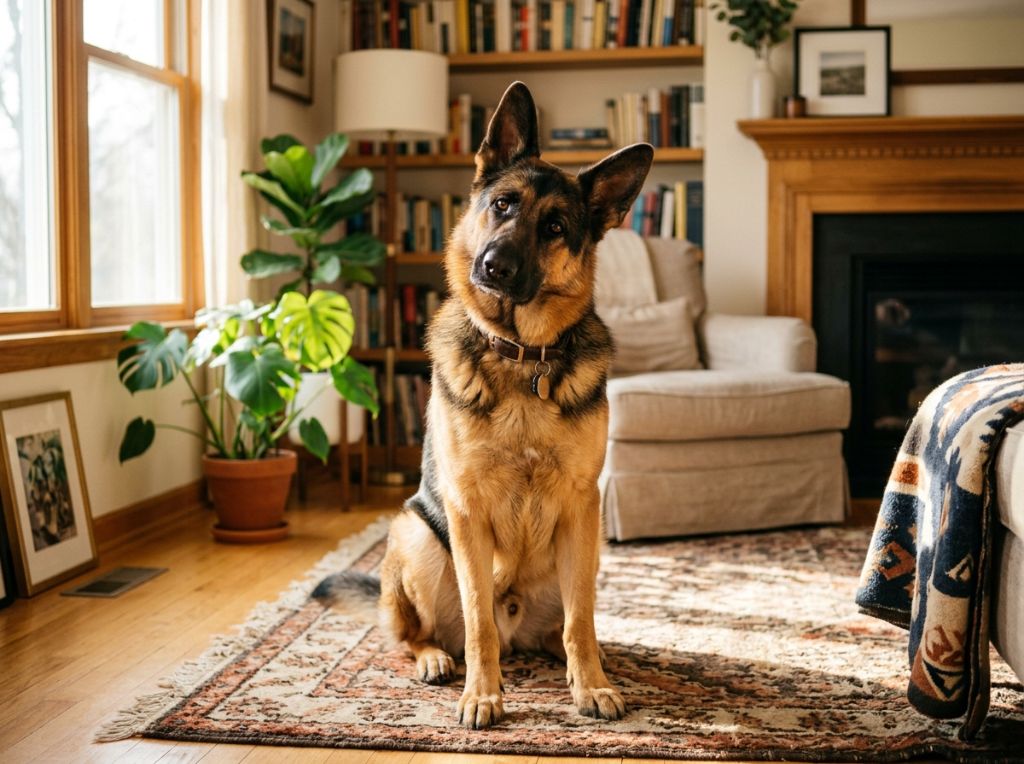
If you share your home with a Border Collie, you already know you aren't just living with a pet—you are living with a high-performance athlete who also happens to have a PhD in problem-solving. This breed is widely considered the most intelligent in the world, a trait that makes them incredible partners but also exceptionally prone to trouble when they are bored. When a Border Collie doesn't have a 'job' to do, they often invent their own, which usually involves reorganizing your throw pillows into confetti or excavating a new tunnel system in your backyard.
Destructive behavior in Border Collies is rarely about being 'bad' or stubborn. Most often, it is a desperate plea for mental engagement. If you have been struggling with a pup who can't seem to settle, it is likely because their brain is still running at full speed long after their body has finished a walk. The secret to a calm, well-behaved Border Collie isn't just more physical exercise; it is deep, focused mental enrichment.
Why Border Collies Need More Than Just a Walk
Unlike many other breeds, a simple walk around the block does almost nothing to tire out a Border Collie. These dogs were bred to work long hours in challenging conditions, making split-second decisions and managing entire flocks of sheep. Their endurance is legendary. If you only focus on physical exertion, you are essentially just building a more fit athlete who is still bored. To truly prevent unwanted chewing or barking, you must tap into their cognitive abilities.
🐶 Unlock Your Dog's Hidden Intelligence!
Transform your dog's behavior with **Brain Training for Dogs** – a proven, science-based training system that enhances your dog's intelligence and obedience.
🐾 Get Started Today →Before diving into the activities, it is helpful to recognize the signs your dog needs more mental stimulation so you can intervene before your furniture pays the price. By integrating the following seven activities into your daily routine, you can satisfy your dog's instinctual needs and foster a much more peaceful home environment.
1. Scent Work: The 'Find It' Game
A dog’s nose is their primary gateway to the world, and scent work is one of the most exhausting activities for their brain. For a Border Collie, focusing on a specific scent requires an immense amount of concentration.
Start simple by hiding high-value treats around a room while your dog is in a 'stay' position. Give them a release command like 'Find it!' and watch them go to work. As they get better, hide the treats in more difficult spots—inside an open box, under a rug, or at different heights. This mimics the natural foraging behavior and provides a sense of accomplishment once the 'prey' (the treat) is found.
2. Advanced Trick Training
Border Collies thrive on learning new sequences. Once they have mastered the basics of sit, stay, and come, they need more complex challenges to stay engaged. Learning to chain behaviors together—such as 'go to your bed, pick up your toy, and then bring it to me'—forces them to think through several steps.
When you teach your dog advanced tricks using positive reinforcement, you are strengthening your bond while burning through their mental energy. Tricks like 'leg weaves,' 'spinning,' or even 'cleaning up' their toys into a basket are perfect examples of tasks that keep their minds sharp.
3. Interactive Puzzle Feeders and DIY Challenges
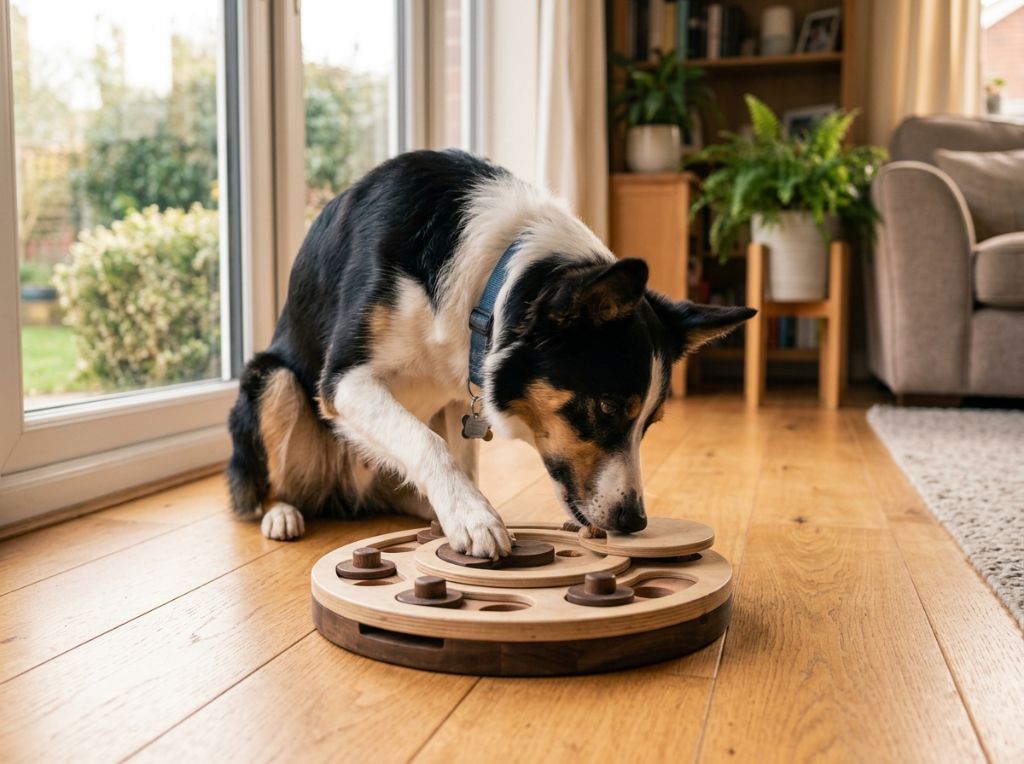
If you are still feeding your Border Collie out of a standard bowl, you are missing a massive opportunity for enrichment. A bowl allows them to finish a meal in thirty seconds. A puzzle feeder, however, can turn mealtime into a 20-minute problem-solving session.
You can find many high-quality progressive puzzles on the market, or you can create your own at home. For instance, putting treats inside a muffin tin and covering each hole with a tennis ball creates a simple but effective logic game. Engaging in these problem-solving games for dogs is a fantastic way to keep them occupied while you are busy with work or household chores.
4. Treibball: The 'Urban Herding' Sport
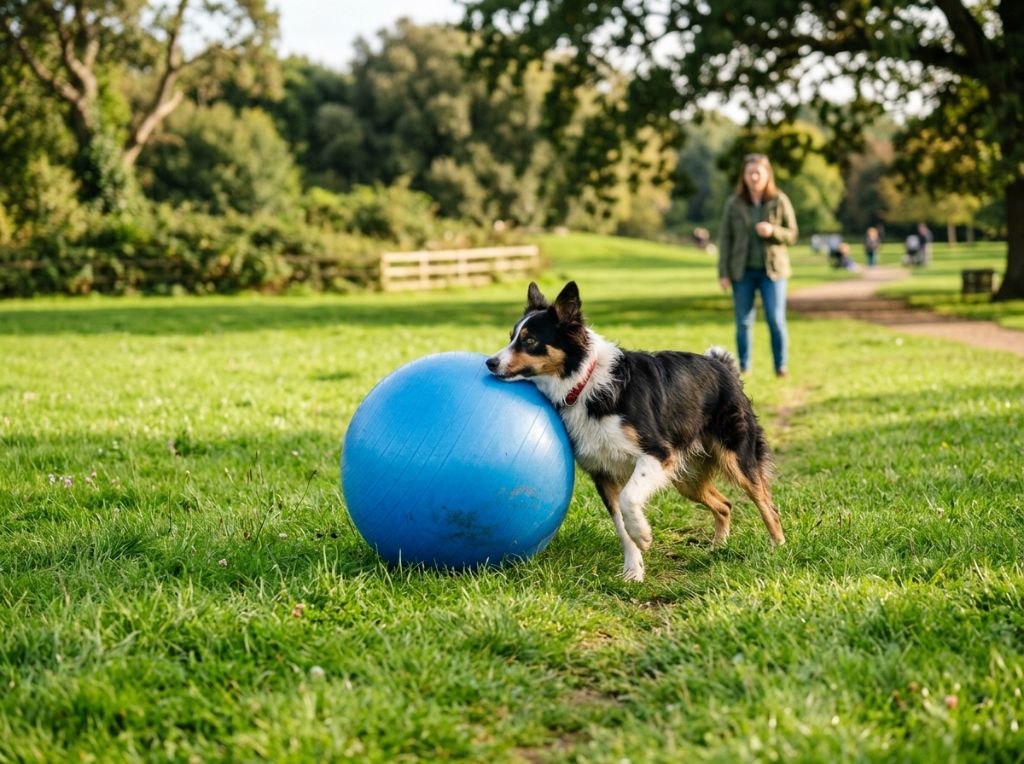
Since most of us don't have a flock of sheep in the backyard, Treibball is the next best thing. This competitive sport involves the dog 'herding' large exercise balls into a goal using their nose or shoulders, guided by their handler's whistle or hand signals.
It satisfies the Border Collie's deep-seated herding instinct without the need for live animals. It requires intense focus, impulse control, and excellent communication between you and your dog. Even if you don't compete, practicing the basics in your yard provides a high-level mental and physical workout that few other activities can match.
5. Hide and Seek with People
This is a classic for a reason. Border Collies are incredibly observant and deeply attached to their owners. Have one family member hold the dog while you go hide in another part of the house. Once you are hidden, call your dog once.
They will use a combination of hearing and scent to track you down. When they find you, celebrate with a huge reward—either a favorite toy or a special treat. This game works on their recall skills while also making them use their brain to map out where you might be. It is much more stimulating than simply calling them across a flat yard.
6. The 'Toy Name' Game
Border Collies are famous for their ability to learn hundreds of distinct nouns. Chaser, the famous Border Collie, knew over 1,000 toy names! You can start this at home by naming two or three of their favorite toys (e.g., 'Ball,' 'Teddy,' 'Rope').
Put the toys in a pile and ask for a specific one. If they bring the correct one, reward them heavily. Over time, increase the number of toys and the complexity of the requests. This type of vocabulary building is essentially 'brain weightlifting' for a Border Collie. It prevents the boredom that leads them to seek out their own 'toys'—like your expensive leather shoes.
7. Systematic Clicker Training
Clicker training is a precise way to communicate exactly what behavior you are rewarding. Because it requires the dog to 'trial and error' their way to a reward, it is highly engaging. For a breed as smart as the Border Collie, the clicker acts like a bridge that helps them understand complex tasks faster.
🐕 Transform Your Dog’s Life Today!
Imagine a world where your dog listens, learns quickly, and behaves perfectly! With **Brain Training for Dogs**, you’ll experience a joyful, well-trained pet in no time!
🌟 Begin the Transformation →If you are new to this method, clicker training for dogs is a great way to start refining their behavior. You can use it to shape tiny movements, like resting their chin on a specific object or touching a target with their paw. This level of precision requires intense concentration from the dog, which is exactly what leads to a tired, happy pup at the end of the day.
How to Handle Persistent Destructive Habits
If your Border Collie is already in the habit of chewing, it is important to understand the 'why' behind it. Punishment rarely works with this breed; it usually just increases their anxiety. Instead, look for ways to redirect that energy. If you are struggling with a specific issue, learning how to stop a dog from chewing through redirection and proper outlets is essential.
Sometimes, the issue isn't just a lack of games, but a lack of structured cognitive development. This is where programs like Brain Training for Dogs become invaluable. These programs provide a step-by-step roadmap to increasing your dog's intelligence and focus, which naturally eliminates the 'need' for destructive behaviors. According to the American Kennel Club, mental stimulation is just as vital as physical health for working breeds.
FAQ: Frequently Asked Questions
Q: How much mental stimulation does a Border Collie need daily?
A: Most Border Collies benefit from at least 60 to 90 minutes of dedicated mental work, split into several short sessions throughout the day. This is in addition to their physical exercise.
Q: Can enrichment replace physical exercise?
A: No, they go hand-in-hand. While enrichment tires out the brain, your Border Collie still needs opportunities to run and stretch their legs. However, mental stimulation is often more effective at stopping destructive behaviors than physical exercise alone.
Q: My dog gets frustrated with puzzles. What should I do?
A: Always start with the easiest level. If a puzzle is too hard, they may give up and resort to chewing the puzzle itself. Help them 'win' the first few times so they build confidence in their problem-solving skills.
Q: Are these activities suitable for older Border Collies?
A: Absolutely! In fact, mental enrichment is vital for senior dogs to keep their cognitive functions sharp. You can simply adjust the physical intensity of the games to suit their mobility.
Conclusion
Living with a Border Collie is a journey in constant creativity. By providing these seven enrichment activities, you aren't just saving your furniture—you are fulfilling the genetic potential of your dog. A tired Border Collie is a happy Border Collie, and a happy Border Collie is one that would rather nap at your feet than chew on the baseboards.
If you're ready to take your dog's mental development to the next level and finally put an end to the 'boredom-induced' chaos, consider looking into a structured mental workout. It’s the kindest thing you can do for a dog with a mind that never stops.
🐾 Say Goodbye to Bad Behavior!
Tired of your dog's stubborn habits? Discover a **fun and easy** brain training system that turns any dog into a well-behaved genius in just a few weeks!
🐶 Start Training Now →