
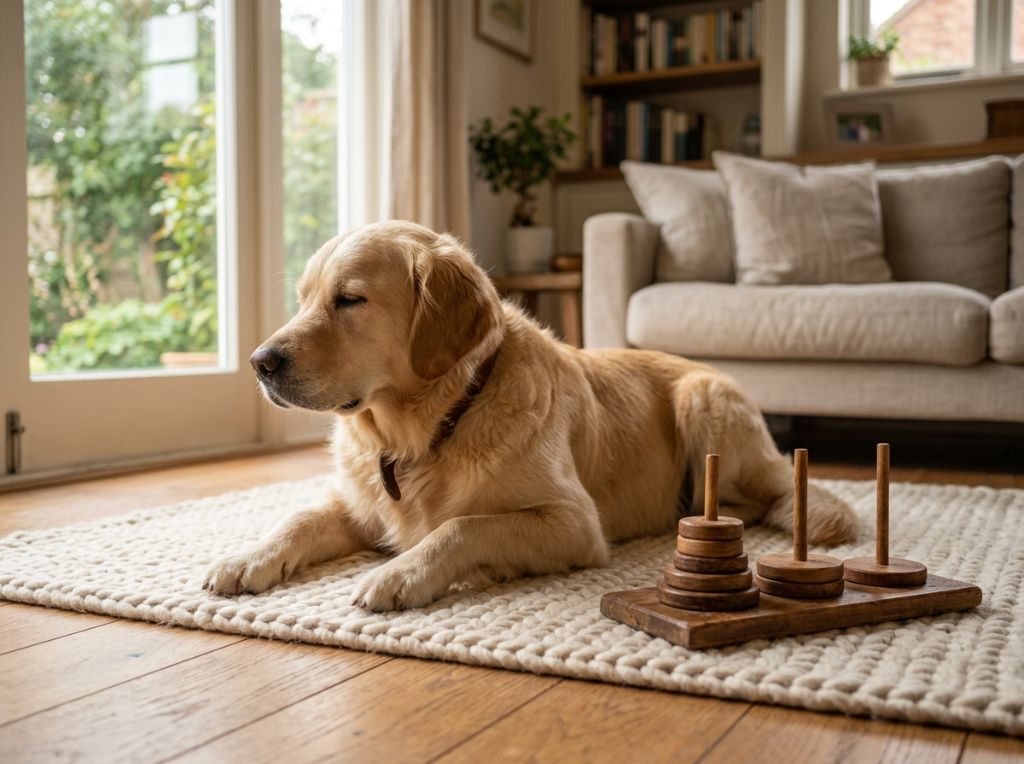
You know the feeling all too well. You pick up your keys, and the whining starts. You put on your shoes, and those soulful eyes follow your every move, filled with a mounting sense of dread. By the time you close the front door, you can already hear the first howl or the frantic scratching against the wood. Coming home to a destroyed sofa or a neighbor’s noise complaint isn't just frustrating—it’s heartbreaking because you know your best friend is suffering.
Separation anxiety is one of the most challenging hurdles for dog owners. We often think the solution lies in more exercise or better crates, but what if the real answer lies in your dog's mind? Emerging research and modern training methods suggest that brain training for dogs might be the missing piece of the puzzle. By shifting the focus from physical exhaustion to mental engagement, we can help our pups build the confidence they need to stay calm when we aren't there.
Understanding the Roots of Separation Anxiety
Separation anxiety isn't just a "bad behavior" or a lack of discipline. It is a genuine panic attack. When a dog feels that their primary attachment figure is leaving, their nervous system goes into overdrive. This often results in destructive chewing, excessive barking, or even self-harm. While physical exercise is important, a tired body doesn't always equal a quiet mind. In fact, an over-exercised but mentally under-stimulated dog can become an "athlete" who is still vibrating with anxious energy.
🐶 Unlock Your Dog's Hidden Intelligence!
Transform your dog's behavior with **Brain Training for Dogs** – a proven, science-based training system that enhances your dog's intelligence and obedience.
🐾 Get Started Today →This is where mental stimulation becomes crucial. When we engage a dog's brain, we are helping them develop focus and self-control. If you have noticed 5 signs your dog needs more mental stimulation, you already know that a bored dog is a stressed dog. Separation anxiety is often exacerbated by a mind that doesn't know how to switch off or solve problems independently.
The Science of Brain Training and Calmness
How exactly does learning a new trick or solving a puzzle help with anxiety? It comes down to neuroplasticity and the endocrine system. When a dog engages in brain games, their brain releases dopamine—the "feel-good" neurotransmitter associated with reward and motivation. This creates a positive mental state that is the direct opposite of the cortisol-heavy state of panic.
By teaching your dog to think through challenges, you are essentially building their "confidence muscle." A dog that knows how to solve a puzzle or navigate a complex command learns that they can handle uncertainty. This confidence carries over into their daily life. Instead of viewing your departure as a catastrophic event, they begin to see their time alone as an opportunity for quiet or mental processing.
Can Mental Stimulation Replace Traditional Training?
It is important to clarify that brain training is a supplement to, not a replacement for, proper desensitization. However, it makes the desensitization process much faster. If you are currently teaching your dog to be comfortable while you’re away, you'll find that a dog who has had 15 minutes of intensive brain work is far more receptive to training than one who is simply waiting for the next walk.
Professional programs, such as the widely acclaimed Brain Training for Dogs, focus on this exact principle. These programs use force-free, positive reinforcement techniques to engage a dog’s hidden intelligence. Instead of using fear or pressure, they turn learning into a game. This is particularly helpful for anxious dogs who may be sensitive to harsher training methods.
Practical Brain Games to Try Today
If you're wondering where to start, you don't need a PhD in animal behavior. You can start with simple games that encourage your dog to use their nose and their problem-solving skills.
- The Muffin Tin Game: Place treats in the holes of a muffin tin and cover them with tennis balls. Your dog has to figure out how to remove the balls to get to the rewards.
- The Name Game: Start naming your dog's toys. Ask them to "find the bear" or "get the ball." This requires immense focus and builds a stronger communicative bond between you.
- Hide and Seek: Hide high-value treats around the living room and give your dog the "search" command. This mimics natural foraging behavior and is incredibly soothing for the canine brain.
These activities provide what the American Kennel Club refers to as "canine enrichment," which is vital for a well-adjusted pet. When a dog is tired from thinking, they are much more likely to settle down for a nap when you head out the door.
Why Structure Matters for Anxious Pups
Anxiety thrives on unpredictability. When a dog doesn't know what to expect, they remain in a state of high alert. Brain training provides a structured "job" for your dog. If you spend 10 to 20 minutes every morning on a structured mental workout, you are setting a rhythm for the day. This routine tells the dog: "We work together, we challenge our minds, and then we rest."
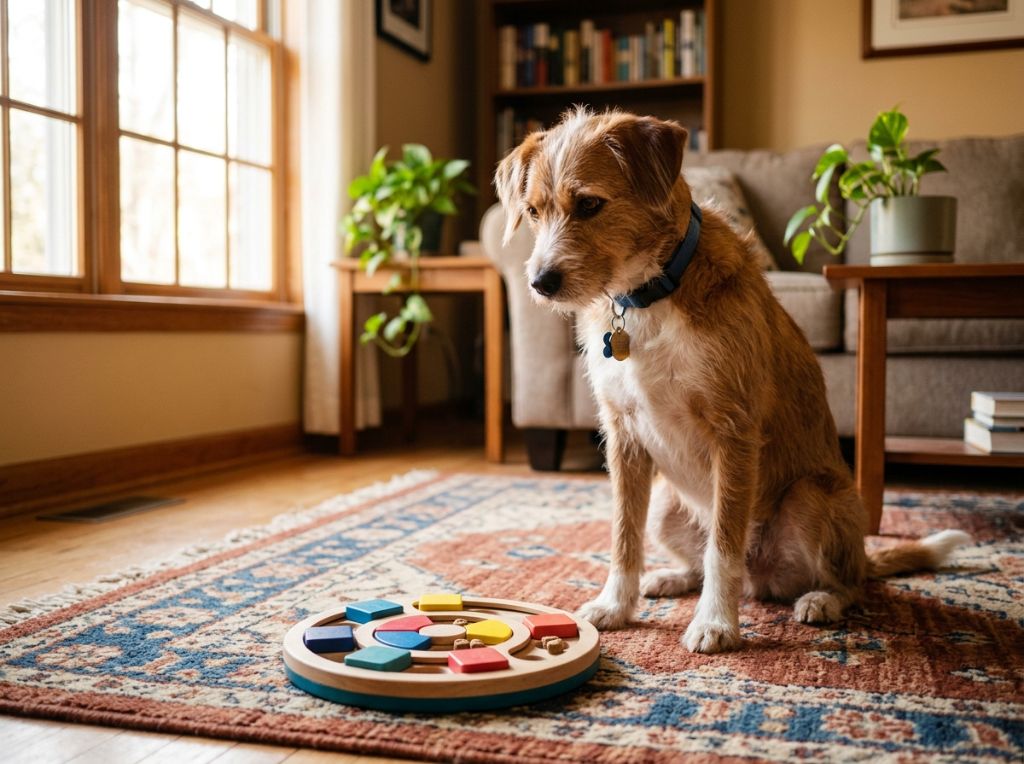
If you're questioning the effectiveness of these methods, you aren't alone. Many owners wonder, does brain training for dogs actually work? for serious issues like anxiety. The consensus among positive-reinforcement trainers is a resounding yes. By tapping into their natural intelligence, you are addressing the root cause of the agitation rather than just masking the symptoms.
The Role of High-Energy Breeds
Some dogs are more prone to separation-related distress simply because of their DNA. Working breeds like Border Collies, Labradors, and Shepherds have a biological drive to work. When that drive isn't met, it often manifests as anxiety. For instance, why your German Shepherd is bored often comes down to a lack of complex tasks. For these breeds, brain training isn't just a "nice to have"—it’s a biological necessity.
Using a structured program helps ensure you are progressing through difficulty levels at the right pace. If a game is too easy, the dog stays bored. If it's too hard, they get frustrated. A good program like Brain Training for Dogs find the "Goldilocks zone" of mental challenge that keeps them engaged and building confidence.
Common Pitfalls to Avoid
When using brain training to combat separation anxiety, there are a few mistakes to watch out for:
- Training right before you leave: You want the dog to be in a calm, relaxed state when you exit. Do the heavy mental lifting about 30–60 minutes before you plan to go.
- Over-stimulating the dog: If the games become too high-energy (like frantic fetching), you might actually increase their arousal levels. Stick to puzzles, scent work, and precision commands.
- Ignoring the environment: Brain training works best when combined with a safe, comfortable space. Make sure they have a cozy spot to retreat to once the "work" is done.
Final Thoughts: A Mind at Peace
Separation anxiety doesn't have to be a life sentence for you or your dog. While it requires patience and a multi-faceted approach, engaging your dog’s mind is one of the most effective ways to lower their overall stress levels. When you unlock your dog’s hidden intelligence, you aren't just teaching them tricks; you are giving them the tools to navigate a world that can sometimes feel very overwhelming for a pup left alone.
By investing in their mental health, you are fostering a deeper bond and a quieter, happier home. Start small, be consistent, and watch as your stressed pup transforms into a confident, calm companion.
🐕 Transform Your Dog’s Life Today!
Imagine a world where your dog listens, learns quickly, and behaves perfectly! With **Brain Training for Dogs**, you’ll experience a joyful, well-trained pet in no time!
🌟 Begin the Transformation →FAQ
1. How long does it take for brain training to show results for anxiety?
While every dog is different, many owners notice a calmer demeanor within the first two weeks of consistent daily mental stimulation. For deep-seated separation anxiety, it should be used alongside a gradual desensitization plan.
2. Is my dog too old to start brain training?
Never! Dogs of all ages benefit from mental engagement. In senior dogs, brain training can even help slow down cognitive decline and give them a renewed sense of purpose.
3. Do I need expensive toys for brain training?
Not at all. While there are many great puzzles on the market, you can do a lot with household items like towels, boxes, and muffin tins. The most important "tool" is your interaction and guidance.
4. Can brain training help with barking when I’m gone?
Yes. Much of the barking associated with separation is a result of boredom or high-alert stress. A mentally tired dog is much more likely to sleep through outside noises rather than reacting to them.
🐾 Say Goodbye to Bad Behavior!
Tired of your dog's stubborn habits? Discover a **fun and easy** brain training system that turns any dog into a well-behaved genius in just a few weeks!
🐶 Start Training Now →