
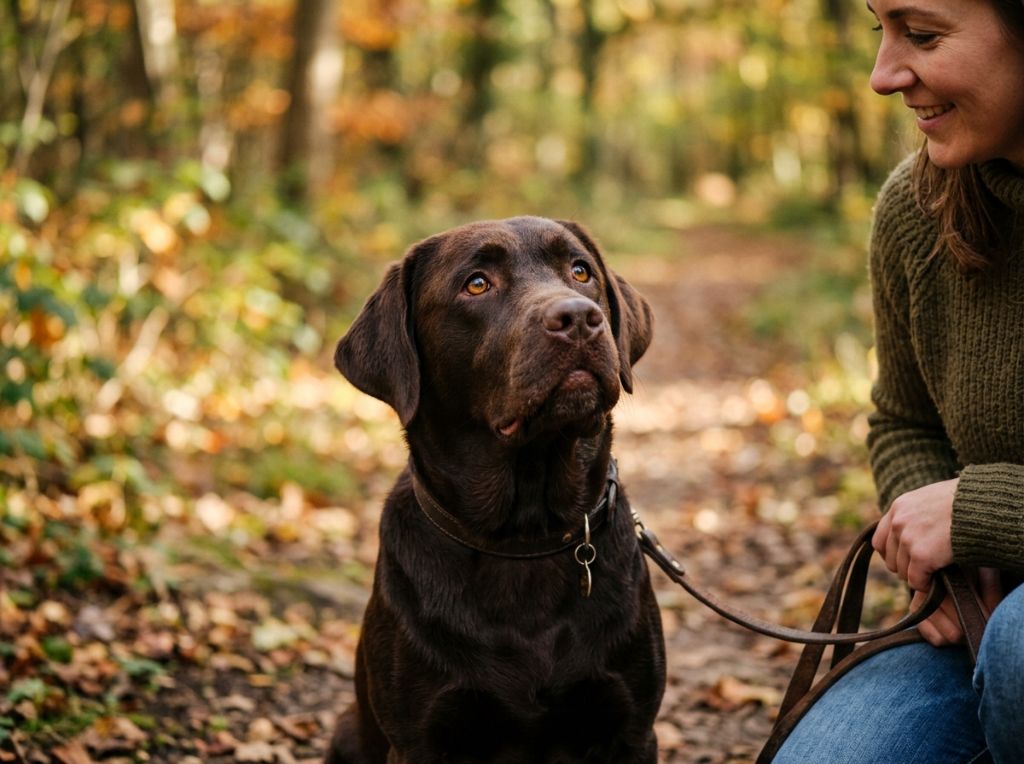
If you share your home with a Labrador Retriever, you know the look. It is that wide-eyed, tail-thumping, slightly manic stare that happens the moment you open a cabinet or rustle a plastic bag. To a Lab, every calorie is a treasure and every crumb is a crisis. While this bottomless appetite can lead to issues like counter-surfing, it is actually a hidden superpower for training. The key is learning how to bridge the gap between a dog that just wants the treat and a dog that wants to work for you. In this guide, we will explore how to harness that legendary drive to build rock-solid focus.
Why Are Labradors So Food Motivated?
It is not just in your head; your Lab really is hungrier than the average dog. Scientific research has shown that many Labrador Retrievers carry a variation of the POMC gene, which is responsible for regulating hunger. This genetic quirk essentially turns off the 'I am full' switch, making them perpetually ready for their next snack. According to the American Kennel Club, understanding this biological drive is the first step toward effective breed-specific training. Instead of fighting against nature, we can use this biological 'glitch' as a powerful motivator for high-level obedience.
The Shift: Bribe vs. Reward
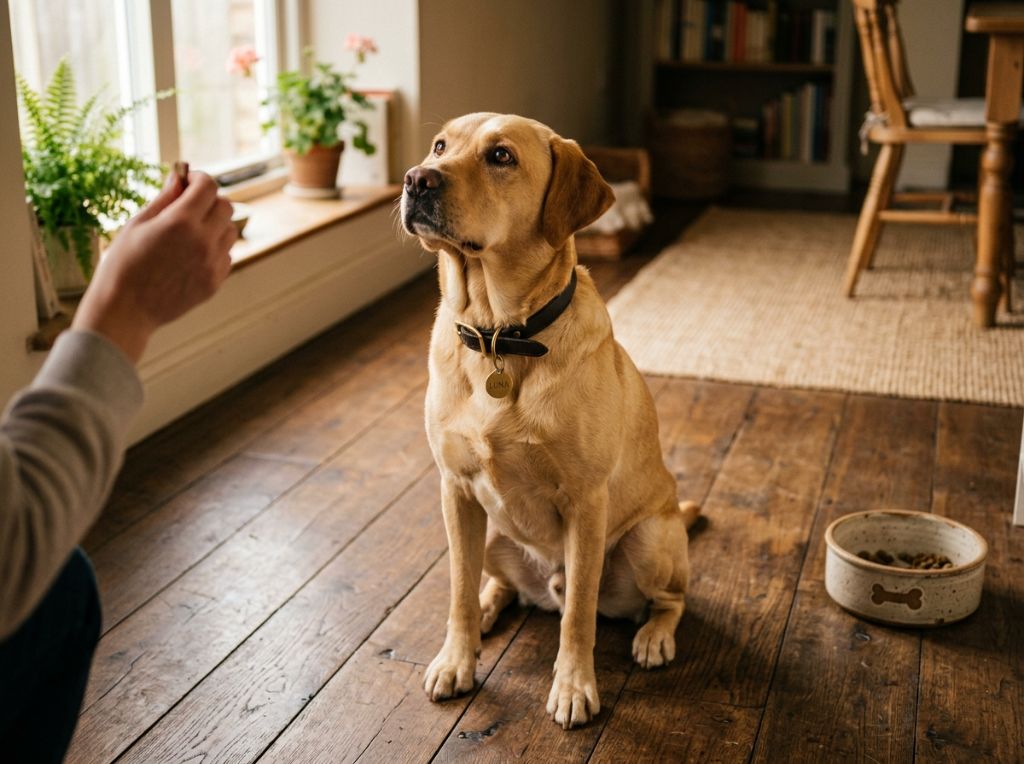
The biggest mistake Lab owners make is using food as a bribe rather than a reward. If you find yourself showing your dog a biscuit just to get them to sit, you are bribing them. This often leads to a dog that only listens when you have a treat visible in your hand. To fix this, we need to hide the reward. Start by teaching your dog to sit, stay, and come in 7 days using a 'reward from behind' technique. Keep your treats in a pouch or pocket, ask for the behavior, and only reach for the food once the dog has successfully completed the task. This builds the expectation that focus leads to food, even if the food is not immediately visible.
🐶 Unlock Your Dog's Hidden Intelligence!
Transform your dog's behavior with **Brain Training for Dogs** – a proven, science-based training system that enhances your dog's intelligence and obedience.
🐾 Get Started Today →Building Impulse Control Through 'The Zen Bowl'
Impulse control is the 'holy grail' of Lab training. Because they are so driven by their stomachs, they often lunge toward rewards without thinking. 'The Zen Bowl' is a simple game to reverse this behavior. Place a single piece of kibble in a bowl on the floor while holding your dog back. If they strain toward it, cover the bowl with your hand. The moment they stop pulling and look at you, uncover the bowl and let them eat. This teaches them a vital lesson: moving away from the food (or looking at you) is the fastest way to get it. This foundational skill is essential for later stages like off-leash training, where focus must remain on you despite distractions.
Turning Mealtime into Brain Time
If you are feeding your Lab from a standard bowl, you are missing out on two huge training opportunities every single day. Labs are genetically wired to forage. By making them work for their meals, you drain excess energy and improve their cognitive function. You can use slow feeders, snuffle mats, or even scatter their kibble across the lawn. This high level of engagement is a form of mental stimulation that prevents the 'naughty' behaviors often seen in bored dogs. If you have noticed signs your dog needs more mental stimulation, shifting to interactive feeding is the easiest lifestyle change you can make.
Advanced Focus: The 'Look at That' Game
Once your Lab understands that you are the source of all things delicious, you can start using food to manage distractions. The 'Look at That' (LAT) game involves rewarding your dog for noticing a distraction (like another dog or a squirrel) and then immediately looking back at you. When your Lab spots a distraction, click or use a marker word like 'Yes!' and provide a high-value reward. Over time, your Lab will start to automatically check in with you whenever they see something exciting. This is a game-changer for owners who want to train their dog to walk on a loose leash without being dragged toward every passing scent.
Choosing the Right 'Currency'
Not all treats are created equal. In low-distraction environments like your living room, plain kibble might work perfectly. However, if you are at a busy park, you may need to upgrade to something more enticing like freeze-dried liver or small pieces of plain boiled chicken. To keep your Lab healthy while training, always subtract the caloric value of the treats from their daily meal total. For a list of the best options, check out our guide on healthy dog treats that double as training rewards. Using the right currency ensures your Lab stays motivated even when the world around them is full of competing smells.
FAQs
Q: My Lab gets too excited and nips at my hands when I have food. What should I do?
A: This is common in high-drive dogs. Use a 'closed fist' delivery. Hold the treat in a fist and only open your hand when your dog stops licking or pawing at you. This teaches them that calm behavior, not frantic begging, opens the 'vault.'
Q: Can I train my Lab without using any food at all?
A: While possible, it is like asking someone to work a full-time job for free. Food is a natural motivator for this breed. Once a behavior is learned, you can transition to intermittent rewards or life rewards (like throwing a ball), but food remains the most efficient tool for teaching new skills.
Q: How do I stop my Lab from begging at the dinner table?
A: Consistency is key. Never feed your dog from the table. Use a 'place' command to send them to a designated mat during your mealtime. Reward them with a long-lasting chew or a stuffed toy on their mat so they associate your dinner time with their own quiet activity.
Conclusion
Training a Labrador Retriever is a unique journey fueled by snacks and enthusiasm. By understanding their biological drive for food and turning it into a structured reward system, you can transform a food-obsessed pup into a focused, attentive partner. Remember, the goal isn't to stop them from loving food—it's to teach them that the path to that food always goes through you. With patience and the right mental engagement, your Lab's appetite will become your greatest training asset.
🐾 Say Goodbye to Bad Behavior!
Tired of your dog's stubborn habits? Discover a **fun and easy** brain training system that turns any dog into a well-behaved genius in just a few weeks!
🐶 Start Training Now →

